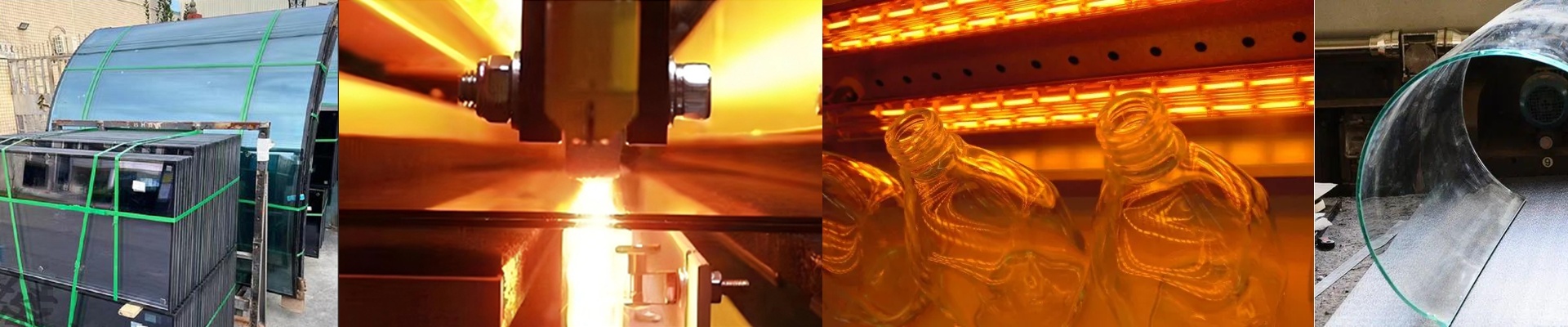
Getting the Heat Right for Glass R&D
If you’ve ever tried using a standard, off-the-shelf dryer for new glass materials, you know the frustration. It usually doesn’t work. You end up with uneven curing or those annoying surface defects because the heat isn’t hitting the coating exactly where it needs to. We don’t just tweak the dimensions of a machine and call it “custom.” We dig into the power density distribution, giving you actual control over the parameters.
Why “Total Wattage” is a Lie
Here’s the thing: Total wattage is basically a vanity metric. It looks great on a spec sheet, but it doesn’t tell you how those watts actually hit the glass. That’s why we play around with the filament winding and spacing. It lets us create specific heat maps along the lamp. You can blast the high-stress zones without accidentally frying the edges. If your material thickness requires a specific kW/cm, we just build it to that. Simple.
Room to Pivot
In an R&D lab, you need to be able to change your mind. You might be testing one coating chemistry today and something completely different tomorrow. You shouldn’t have to rip out your hardware every time you pivot. We build our systems to handle a wide range of power inputs. Whether you need a concentrated hot spot for a quick flash or a nice, flat profile for a slow cure, we tune the internal resistance to make it happen. It gives you the freedom to experiment without the headache.
The Reality Check
Now, there’s a catch. High power density is great for speeding up your cycles, but physics always wins. When you cram extreme wattage into a small footprint, your housing and reflectors take a beating. If your cooling blowers aren’t up to the task, the ambient heat will build up and you might actually warp the machine frame. It’s a real risk. To take the guesswork out of it, we give you the raw thermal data for every profile we build. You can plug that straight into your PLC logic knowing exactly what the heat flux looks like. No guessing. Just physics.