Getting Rid of Cold Spots in Complex Glassware
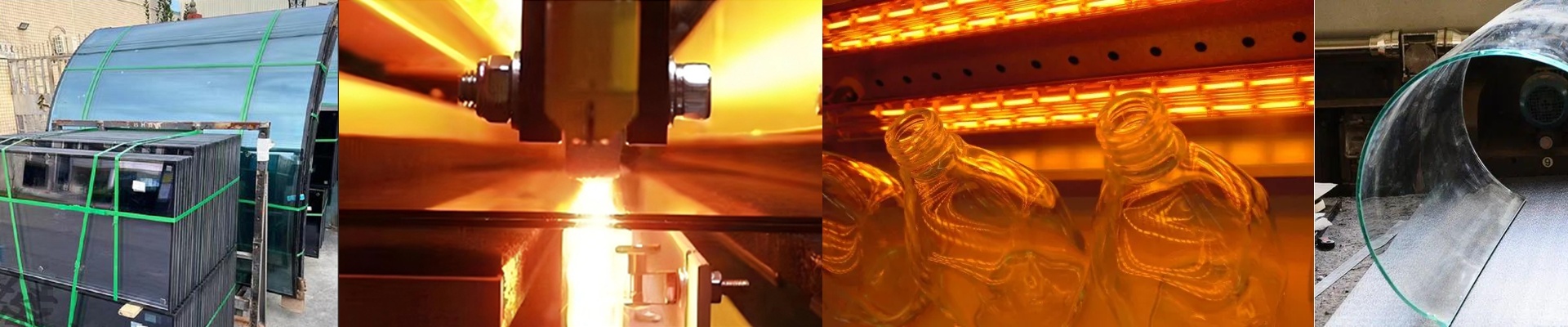
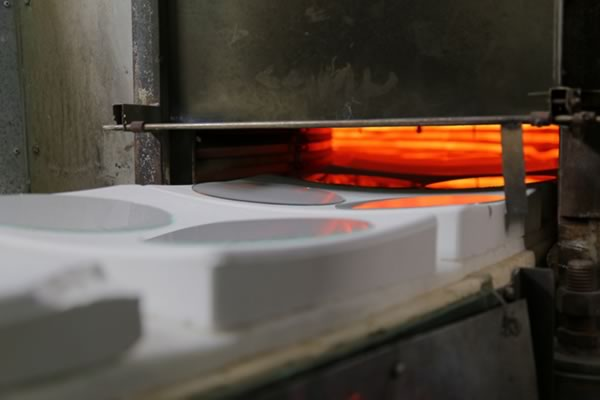
If you’ve spent any time with annealing kilns, you know the frustration of “dead zones.” You’re heating up a complex piece—maybe a custom flask or some odd-shaped labware—and everything looks great except for those recessed areas. The heat just doesn’t reach them. When those spots stay cold, you get uneven stress in the glass. Then, boom. The piece breaks before it even leaves the shop. It’s a nightmare. To fix this, we stop relying on air and start using short-wave infrared (IR) lamps arranged in multi-angle arrays.
How to actually get the heat everywhere
Convection is fine for simple shapes, but it relies on air moving around. IR is different. It hits the glass surface directly. To make sure every curve gets enough heat, we use quartz halogen emitters. They pack a lot of punch in a very small space. We don’t just line them up in a row, either. We stagger them. By doing this, the radiation bounces off the kiln walls or wraps around the glassware using reflective shielding. It’s like surrounding the piece with a blanket of heat, which kills off those stubborn cold spots.
The nitty-gritty on setup
We usually go with high-wattage quartz tubes because they ramp up the temperature fast. We use R7s or SK15 connectors, too. Why? Because when a lamp eventually burns out, you can just pop a new one in and get back to work without a headache. Depending on your glass, you can go with clear quartz for deep penetration or coated tubes if you need to tweak the emission spectrum. Just a heads-up: keep an eye on your power. A dense array of 230V or 400V lamps pulls a lot of juice. You’ll need heavy-gauge cabling and a PID controller that can keep up with how fast IR reacts. If your electronics are sluggish, you’re going to overshoot your target temp.
The trade-offs
Look, IR is fast, but it only travels in a straight line. If your glassware has extreme overhangs or deep pockets, one bank of lamps isn’t going to cut it. You’ll probably need to add a rotating jig or a multi-zone rack. Yeah, that takes up more room in the shop and makes your wiring a bit more chaotic. But if you want a uniform soak on an irregular piece of glass, it’s the only way to do it right.