Building Infrared Heaters That Actually Fit Your Glass Line
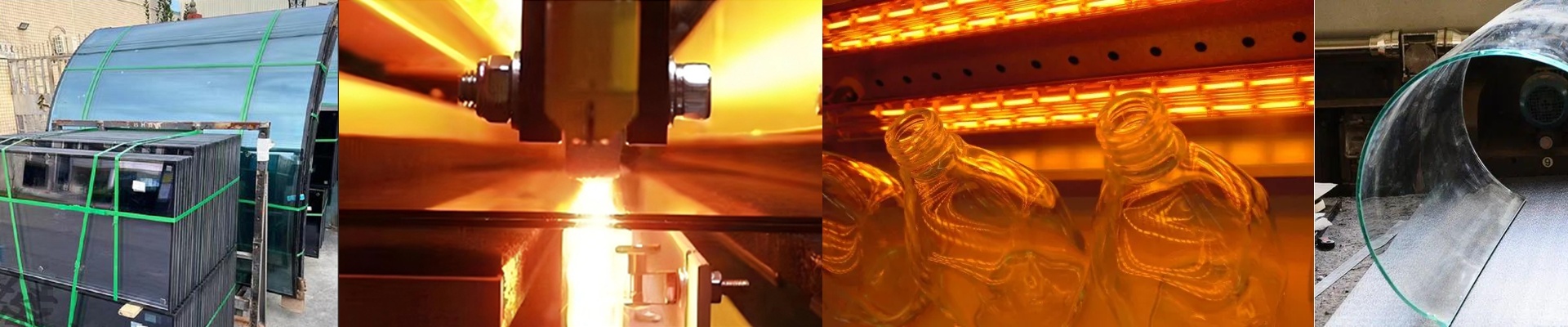
We build custom infrared heating units for one reason: to preheat wide Low-E glass on tempering lines—without messing around. When your line needs a heating zone longer than 3 meters, we don’t cobble together a bunch of small modules. We give you one integrated unit, built to cover the whole span.
Power, voltage, and size—matched to how you run
For these oversized units, we tailor the wattage and voltage to your thermal load and line speed. We typically spec a 400V supply. Why? It keeps current lower across long runs, so voltage drop stays under control and the power supply doesn’t take up a ton of space. The length is designed to cover the full width of the glass—often over 3 meters—so the whole surface gets even heat. No cold edges. No guesswork. Higher power density in a compact zone means one thing: the machine has to be built to handle the heat. So your conveyor, insulation, and cooling have to be matched to the lamp output. No shortcuts.
The parts that make it reliable on the floor
We use shortwave halogen infrared tubes. They respond fast and hit hard—exactly what you need to get up to temperature quickly and hold it steady. The quartz construction takes thermal shock without complaining. And a reflective coating pushes energy forward, so you get more usable heat and less wasted. Then there’s the connector choice. We go with R7s ends because they’re practical. They’re industrial-grade, easy to wire up consistently, and they hold up under vibration and the daily heating-cooling cycle of a busy line.
Why this matters when you’re tempering Low-E glass
Preheating Low-E glass has to be consistent. If it’s uneven, the quench step creates stress and optical defects. Our custom-length infrared units deliver a uniform thermal profile across the full width, so the glass enters the quench at the right temperature—every time.
What you feel on the production floor
One long unit means simpler installation, fewer hot spots, and one clear control point. It’s built to take the heat and keep running. If your line runs large Low-E sheets, you need a preheat solution that matches the scale. We build it to your exact width and thermal requirements—period.