Getting the Heat Right for Specialized Glass
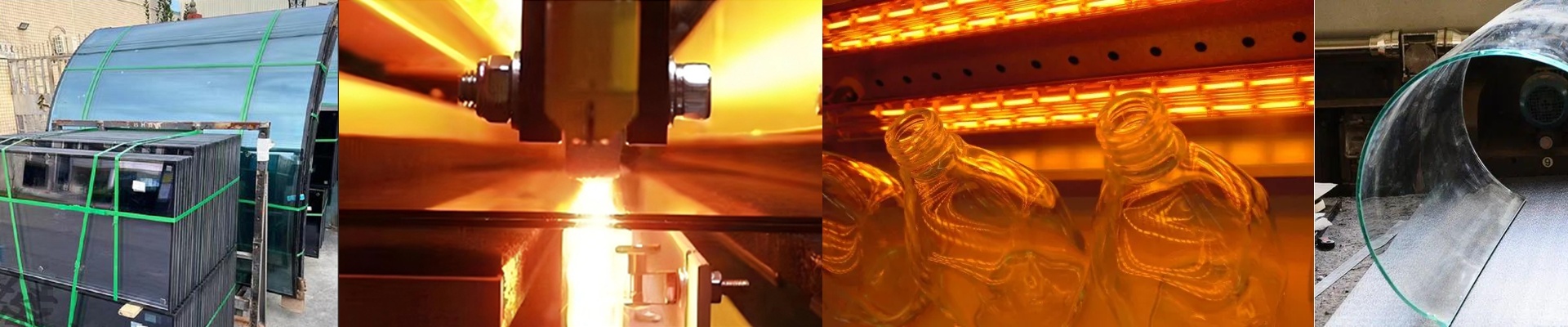
Ever notice how standard infrared heaters just… don’t work when you’re dealing with weird glass? If your glass has specific additives or dopants, it becomes picky. It only wants to absorb energy at certain wavelengths. If you use a generic heater, most of that energy just bounces right off the surface. It’s a waste of power and a headache for you. That’s why we customize the infrared spectrum. We tune it to hit those exact absorption peaks so the heat actually gets inside the glass.
It’s Not About Brute Force
Here’s the thing: you can’t just crank up the wattage to fix a bad match. If you do, you’ll end up “skinning” the glass—where the surface gets scorching hot but the core stays freezing. Not ideal. Instead, we play with the emitter materials and coatings to shift where the heat hits. When the lamp’s peak emission lines up perfectly with your glass chemistry, the heat sinks in deep. You get a uniform temperature throughout the piece, which is exactly what you want.
The Give and Take
Now, there is a bit of a trade-off here. If we go with a narrow-band emitter, we hit that target peak with incredible precision. But, you get less overall power than you would with a broad-band halogen source. It means you have to keep an eye on your cycle times. If we narrow the spectrum too much, your heat-up time might crawl a bit, even if the energy is being absorbed more efficiently. It’s a balancing act.
Making it Work on the Floor
The good news? These heaters are designed to be drop-in replacements for your cooling and reheating tunnels. We use heavy-duty quartz envelopes because we know these things take a beating from thermal shock. One quick tip: keep your power clean. You’ll want a precision power supply. If your voltage jumps around, the filament temperature shifts. And when the temperature shifts, your emission peak moves. If you want your process to be repeatable every single time, don’t let your power supply flicker.