Getting Your IR Heaters to Actually Work With Glass Additives
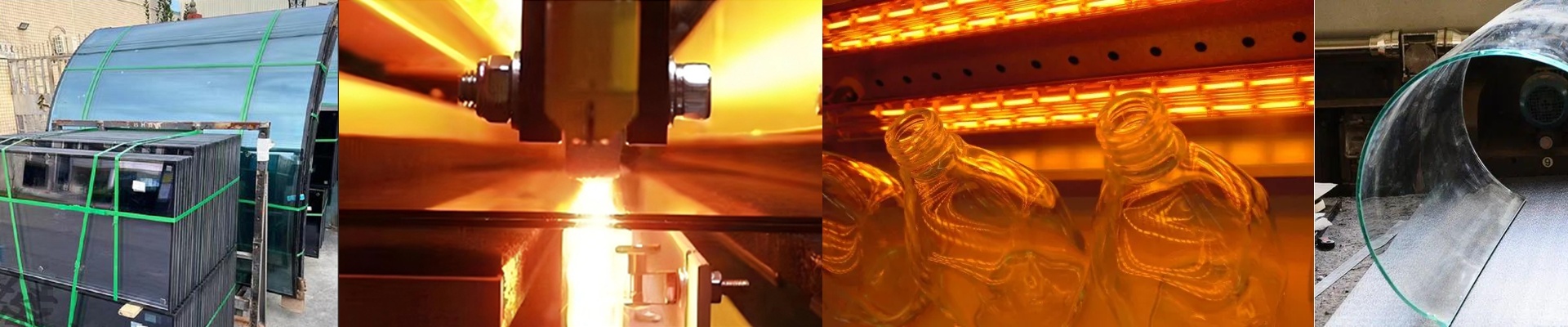
Most standard infrared heaters are just guessing. They pump out energy in a broad curve, but if that curve doesn’t line up with what your material actually wants to absorb, you’re basically just throwing electricity away. When you’re working with specific glass additives, you can’t afford that. You need the heat to hit the exact resonance frequency of those molecules. Otherwise, the energy just bounces off the surface like a stone skipping across a pond. We fix that by tailoring the spectrum so the heat actually sinks in. Tuning the curve We don’t just crank up the wattage and hope for the best. That’s not how this works. Instead, we mess with the filament composition and the gas pressure inside the quartz tube to shift where the peak emission hits. Here’s the thing: glass additives—like certain metal oxides—are picky. They only absorb heat in very narrow bands. If your heater is peaking at 2.5 microns but your additive is waiting for 3.1 microns, you’re just heating the air in the room. We build the lamp to hit that 3.1-micron sweet spot. The quartz and the coatings The tube itself can’t get in the way. If the quartz isn’t transparent to the specific wavelength we’re using, the tube will just soak up the heat it’s supposed to be sending out. To stop that, we use high-purity synthetic quartz. For the really tricky jobs, we add thin-film interference coatings. Think of these as filters. They block the useless wavelengths and squeeze all that energy into the exact window where your glass needs it. The trade-offs (the honest part) Now, there’s a catch. When you narrow the spectral band to hit a specific target, you lose some of that raw, broad power you get from a standard halogen lamp. You’re trading “brute force” for “precision.” Because of that, you might need to add a few more tubes to your setup or let the glass sit under the heat a bit longer to keep your production moving. Just a heads-up: make sure your power controllers can handle the specific impedance of these custom filaments. If they can’t, you’re looking at a premature burnout, and nobody wants to deal with that mid-shift.