


Getting the Heat Right: Dealing with Stress in Tempered Glass
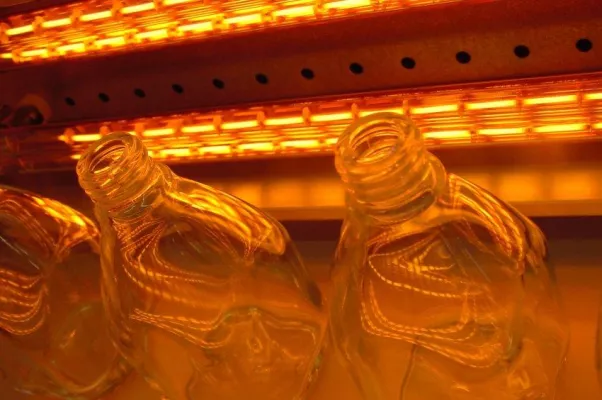
If you’ve ever worked with tempered glass, you know the nightmare of internal stress. You need to ramp the temperature just right. If your heat distribution is a bit wonky, you’re not just wasting time—you’re risking a cracked substrate or creating brand new stress points that’ll haunt you later. That’s why we use shortwave infrared lamps. They push heat deep into the glass fast. Instead of heating up all the air in the room, the energy goes exactly where it belongs.
The Voltage Headache
Here is the thing about most off-the-shelf IR lamps: they usually come in 230V. That’s fine until you’re setting up a line in North America or a heavy-duty industrial site. Suddenly, you’re staring at 110V, 480V, or 575V requirements. It’s a pain. To fix this, we customize the filament winding and the thickness of the quartz tube to match whatever voltage you’re actually running. And there’s a hidden perk to going with a 480V lamp. You pull less current for the same amount of wattage compared to a 110V setup. This means you can use thinner wires and smaller breakers. You won’t have to rip out your entire electrical panel just because you wanted to add a new heating zone.
Hardware and the Trade-offs
We make these lamps as drop-in replacements. Whether you’re using R7s or Sk15 connectors, the fit has to be tight. If it’s loose, you get arcing at high temperatures, and nobody wants that. We also use coated quartz to shift the emission spectrum, which basically just means we’re focusing the heat right on the spot that needs it. But a word of warning: high-wattage tubes put out a massive amount of heat. Your cooling fans are going to feel it. If your cabinet airflow isn’t built for that kind of heat soak, your controllers are going to trip on over-temp. Keep an eye on your fans.
Making it Work on the Line
When it comes to removing stress from glass, consistency is the only thing that matters. We match the lamp length and wattage to your specific conveyor speed. That way, every single square inch of glass hits the target temperature. It keeps the process stable, stops the warping, and ensures the glass is actually safe before it even leaves the line.