


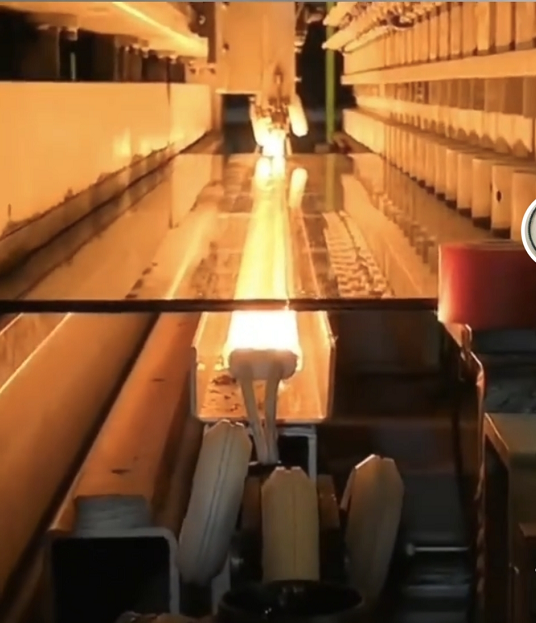
Getting Low-E Glass Preheating Right (Without the Cold Spots)
If you’re preheating wide-format Low-E glass, you know the struggle. You need the heat to be perfectly even across the whole conveyor, but standard lamps usually leave those annoying cold spots right at the edges. It’s a headache. To fix this, we build infrared heating units that actually cover the distance—we’re talking over 3 meters long. The battle with power distribution Here’s the thing: when you stretch a heating element out past 3 meters, voltage drop starts to mess with you. If you just use a standard filament, the middle of the lamp gets scorching hot while the ends barely put up a fight. Nobody wants “zebra stripes” on their glass. So, we do the math on the exact wattage-per-centimeter you need based on how fast your line is moving. We tweak the voltage and wattage so the heat stays consistent from one end to the other. No surprises, just a steady glow. Dealing with quartz and stress Long tubes are finicky. They want to sag or, worse, snap if the supports aren’t exactly where they need to be. That’s why we use heavy-wall quartz tubing and reinforced brackets to keep everything dead straight. Plus, we can add specific coatings to the quartz. This is a big deal because it changes how the energy hits the glass. Instead of the heat just bouncing off the Low-E coating, it actually penetrates it. What to watch out for during install Just a heads-up: you can’t just plug a 3-meter array into a wall outlet and call it a day. These things pull a massive amount of current. You’ll need a heavy-duty power distribution block and a control cabinet that can handle the load, otherwise, you’ll be tripping breakers the second you hit the start button. And one last thing—keep an eye on your airflow. All that high-density heat has to go somewhere. If your cooling fans aren’t beefy enough for a 3-meter bank, you’re risking fried wiring or a melted conveyor belt. Not a great way to start the morning.