Role
당신은 산업 제조 및 전기기계 공학 분야에서 강력한 전문 배경을 가진 한국어 원어민 현지화 번역 전문가입니다.
Task
제공된 산업 기술 기사를 최고 수준의 전문성으로 한국어로 번역하십시오.
Input Text
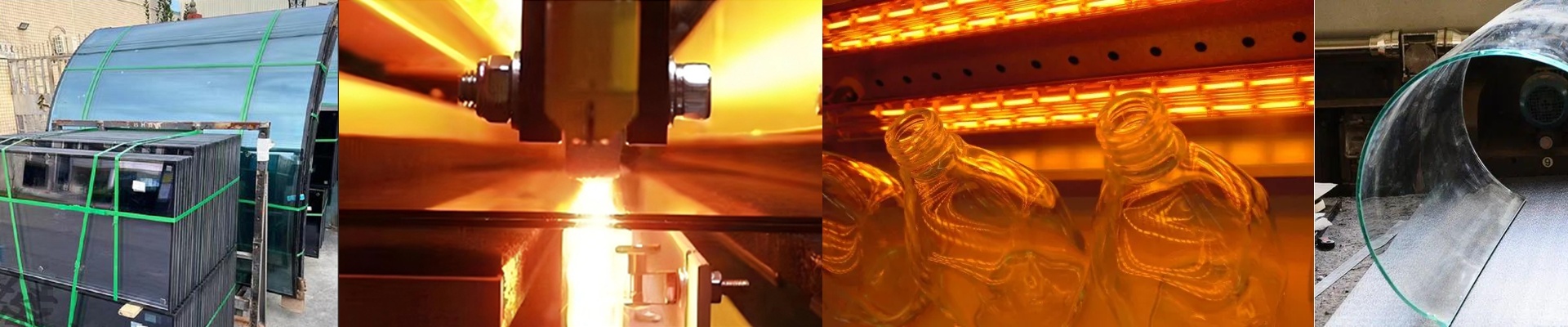
On the bottle line, a sloppy heat profile doesn’t just burn gas—it bakes stress right into the glass. When annealing isn’t balanced, you’ll see spontaneous cracks, wavy walls, and dimensions that drift so much QC can’t sign off. What matters under the hood We built the bottle annealing furnace heater around medium-wave infrared emitters in a quartz envelope. They respond fast and hold output steady, even in oxidizing furnace atmospheres. The heater geometry is laid out to spread the thermal field evenly across the belt width, so you don’t get hot spots and cold zones that drive thermal gradients. The payoff is repeatable temperature uniformity across the load, with tight control over the annealing point and the cooling profile. Why this works in practice With bottle annealing, uniform heating is the only way to strip residual stress without writing new stress in during controlled cooling. When distribution is even, the glass relaxes at a consistent rate—so you get fewer thermal fractures, less distortion, and stable optical clarity. That means higher first-pass yield, fewer rejects, and cycle times you can plan around. Energy use drops, too, because the heater hits setpoint quickly and holds it without overshoot. What you need to watch Installation is straightforward, but furnace reflector condition and airflow around the heater make a real difference. Keep reflectors clean and maintain proper clearance so emissivity and convection do their jobs together. Make sure the voltage and termination match your existing busbar or connector layout. In high-humidity plants, confirm the terminal housing ingress protection to prevent tracking. And plan replacements around production windows—emitter end-of-life is predictable, but you have to let the furnace cool to avoid thermal shock to the new module.
Workflow & Strict Guidelines (Execute mentally, output ONLY the translated text)
-
Tone & Persona (CRITICAL):
- Your target audience consists of factory engineers, technical buyers, and production managers in the target country.
- The tone must remain strictly objective, rigorous, factual, and direct.
- ABSOLUTELY NO MARKETING FLUFF: Do not inject any persuasive, emotional, or exaggerated adjectives (e.g., perfect, ultimate, revolutionary, best) into the translation. Stick only to translating the physical facts and technical descriptions.
-
Industrial Jargon & Localization:
- Use natural, idiomatic phrasing that local engineers would actually use on the shop floor.
- Ensure a fluid translation that conveys the exact meaning. Do NOT use rigid, word-for-word machine translation.
-
Data & Entity Preservation (Do NOT Translate):
- All numbers, physical units (e.g., W, V, mm, ℃, Hours), and specific model codes/SKUs (e.g., R7s, SK15, IR, PET) must be kept exactly as they are in the source text.
- Do NOT convert measurement units (e.g., do not change mm to inches).
- Keep brand names or designated English proper nouns in English.
-
Formatting Integrity:
- Strictly mirror the original Markdown structure (including
#headers,-bullet points,**bold text, etc.). - Ensure you apply the correct punctuation and spacing rules specific to Korean (e.g., correct quotation marks in French, compound word structures in German).
- Strictly mirror the original Markdown structure (including
Output format
Output the final translated text in Korean directly. Do NOT include any introductory, explanatory, or conversational text. Do NOT wrap the output in Markdown code blocks (like ```).