
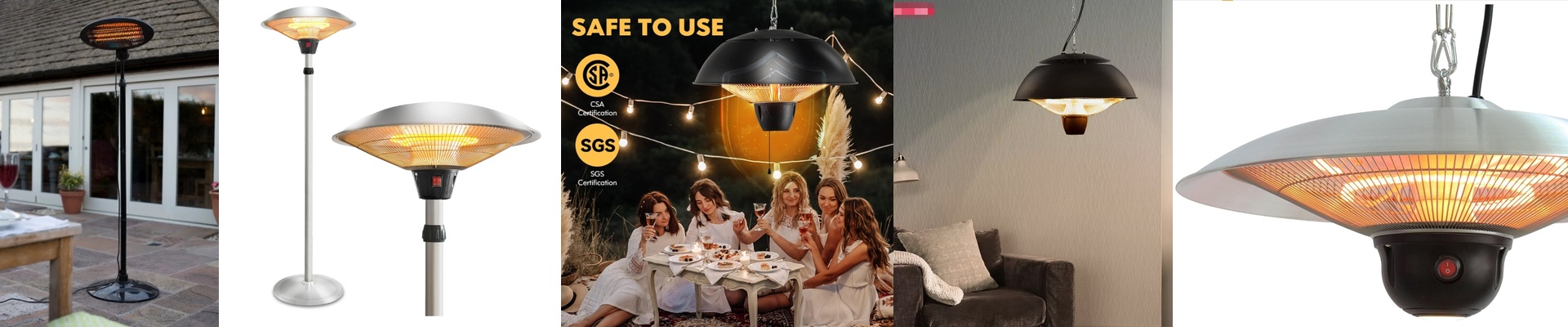


Keeping Things Safe: The Truth About Quartz Heaters in the Bathroom
Let’s be honest: mixing water and high-voltage electricity is a recipe for disaster. When you’re putting a heater in a bathroom, you aren’t just looking for warmth—you’re looking for peace of mind. That’s why we lean on IPX5 rated infrared heaters. They keep the water out so the system doesn’t short. But the real MVP here? That’s the explosion-proof quartz tube.
Why “Explosion-Proof” Actually Matters
Here is the thing about standard quartz: it hates cold water. If a stray droplet hits a tube running at 600°C, it can crack instantly. It’s called thermal shock, and it’s a nightmare. To fix this, we use heavy-wall, tempered quartz. We’ve tweaked the material so it can handle those sudden temperature swings without snapping. Even if a splash hits the element, the glass stays intact. That keeps the live electrical filament exactly where it belongs—far away from you.
The Balancing Act: Seals and Heat
An IPX5 rating basically means the unit can take a low-pressure water jet from any direction and keep on ticking. We make that happen by using high-temp silicone gaskets to seal up the wire entries and the chassis. But there’s a catch. If you seal everything too tightly, you trap the heat. If you shove a high-wattage lamp into a tiny housing without any way for the heat to escape, you’ll fry your internal wiring. It’s a delicate balance. We keep the seals tight enough to block the water, but open enough so the circuitry can breathe.
A Few Tips for Installation
These lamps are great because they give you instant, short-wave heat. It makes drying off after a shower feel like a luxury. Just a heads-up on the wiring: you can plug them directly into the circuit, but please, for the love of everything, use a grounded GFCI outlet. It’s a non-negotiable for safety. One last thing to keep in mind. While these tubes are “explosion-proof” when it comes to heat shock, they aren’t indestructible. If you hit one with something heavy, it’s still going to break. The best move? Mount them in recessed fixtures. It keeps them tucked away and safe from accidental bumps.